The best time of year for a Helsinki food tour
Summer, roughly May to September
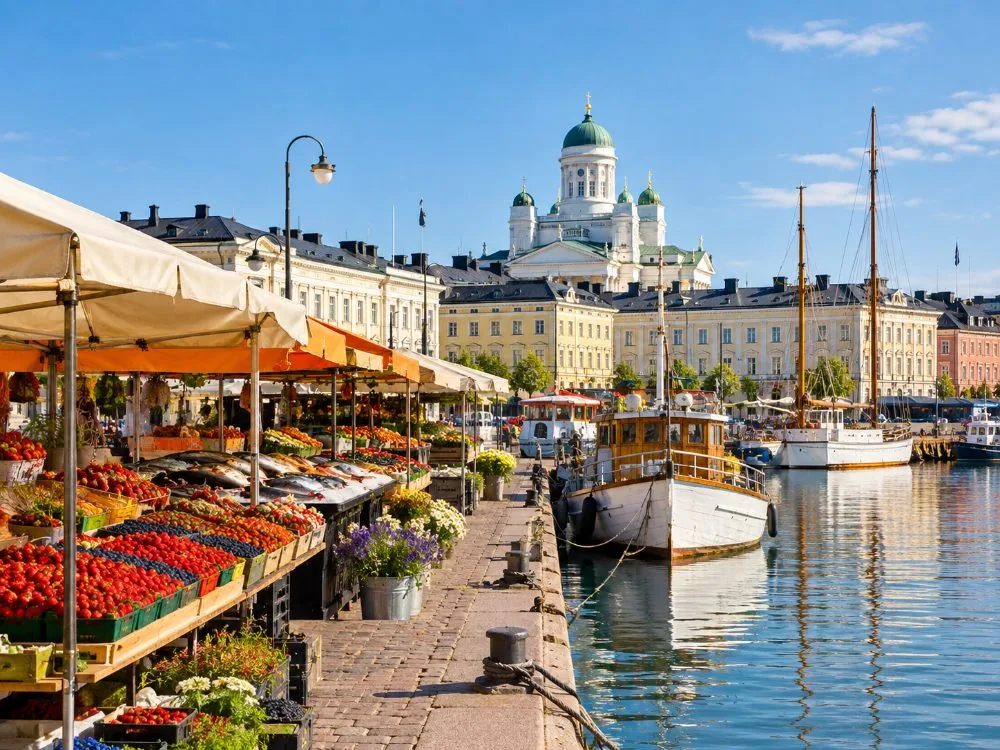
The Market Square fills with stalls: berries in season, fried vendace in paper, coffee tents and a great deal of souvenir. The orange tents are the giveaway. Midsummer brings near-endless daylight, which does odd things to your sense of when to eat, and the terraces stay full late even though Finnish dinner is genuinely early.
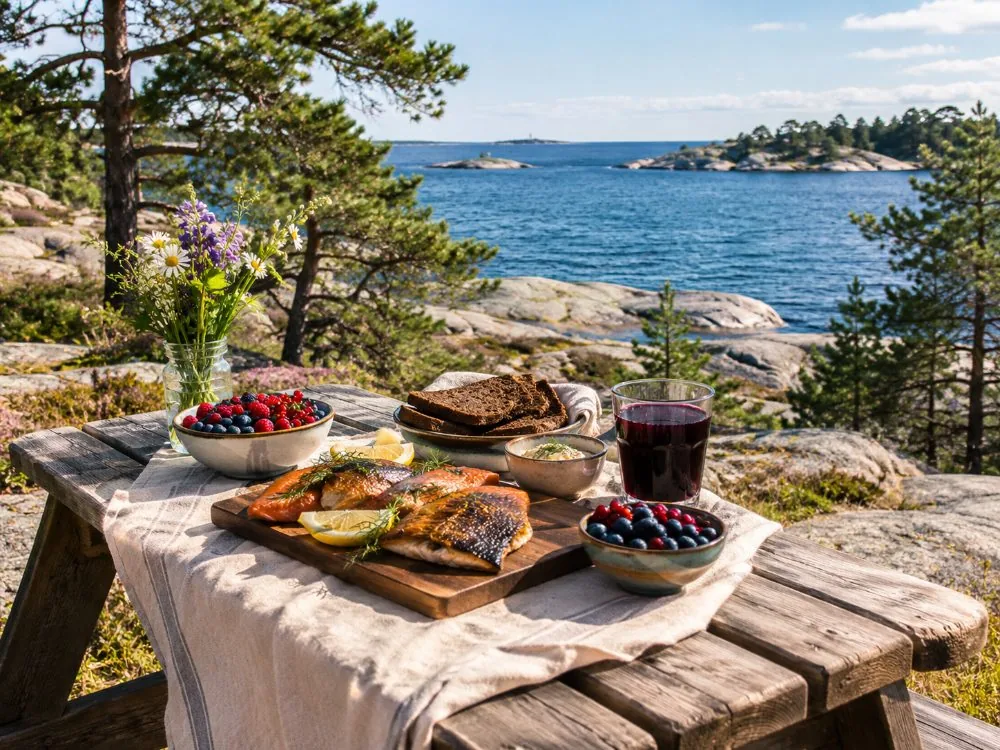
This is also the only window in which the island tasting exists. The waterbus to Pihlajasaari does not run in winter, so a plan built around it in November simply falls apart. If beaches, rock shore and a tasting eaten outdoors is what you want, come between May and September or do not count on it at all.
On the flagship city walk with food tasting, June to August adds the cathedral entry, which is not a food fact but is a real difference in what the three hours contain.
Berry season, roughly July to September
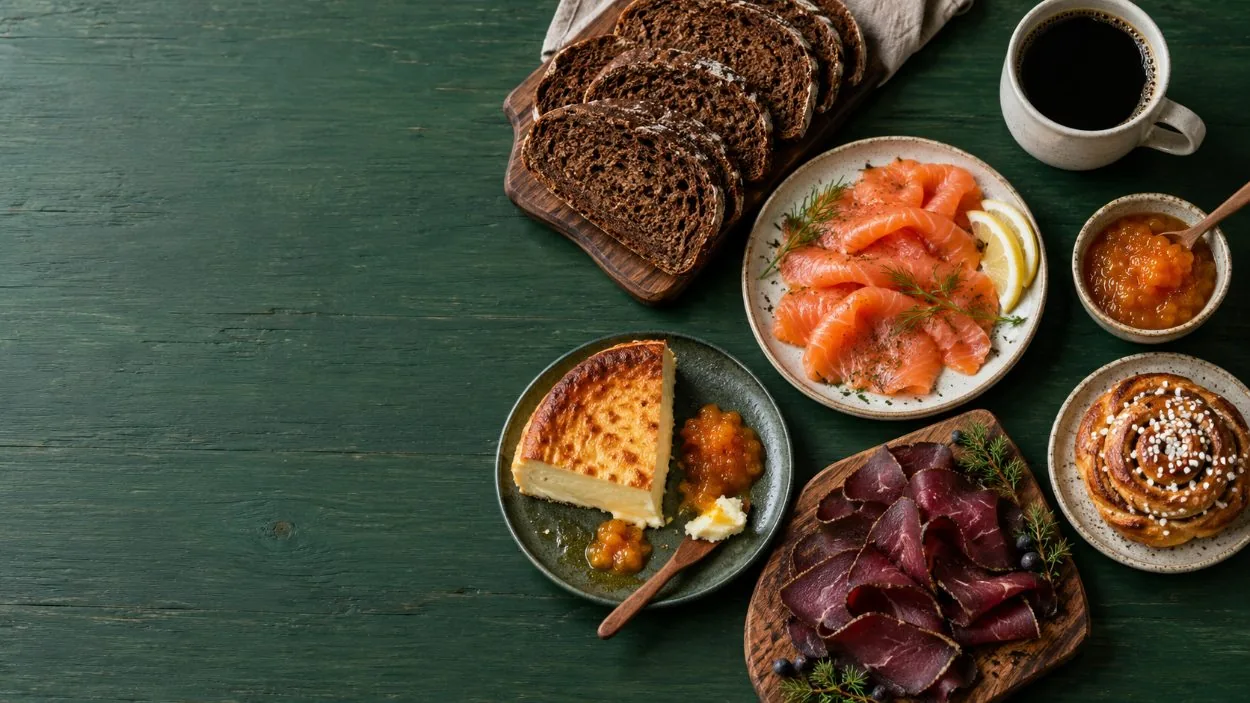
Cloudberries are earlier and briefer than bilberries. Lakka, the amber bog berry that goes with warm squeaky cheese, has a short window; mustikka, the wild bilberry that is dark all the way through, runs longer and ends up in pies and juice. Anybody may pick them free from any forest under everyman's right, which is a fact about Finland worth more than most of the statistics about it. Wild blueberries and the cheese they go with.
Autumn, October and November
The stalls thin, the waterbus stops, the light drops fast, and the halls quietly become the best thing in the city. This is my favourite stretch and almost nobody books it. Counters are calm, the lunch bars have stools free, and a guide has time to answer questions properly instead of moving a group along. From late November the Christmas markets and glögi appear, which changes the smell of the square entirely.
Winter, December to March
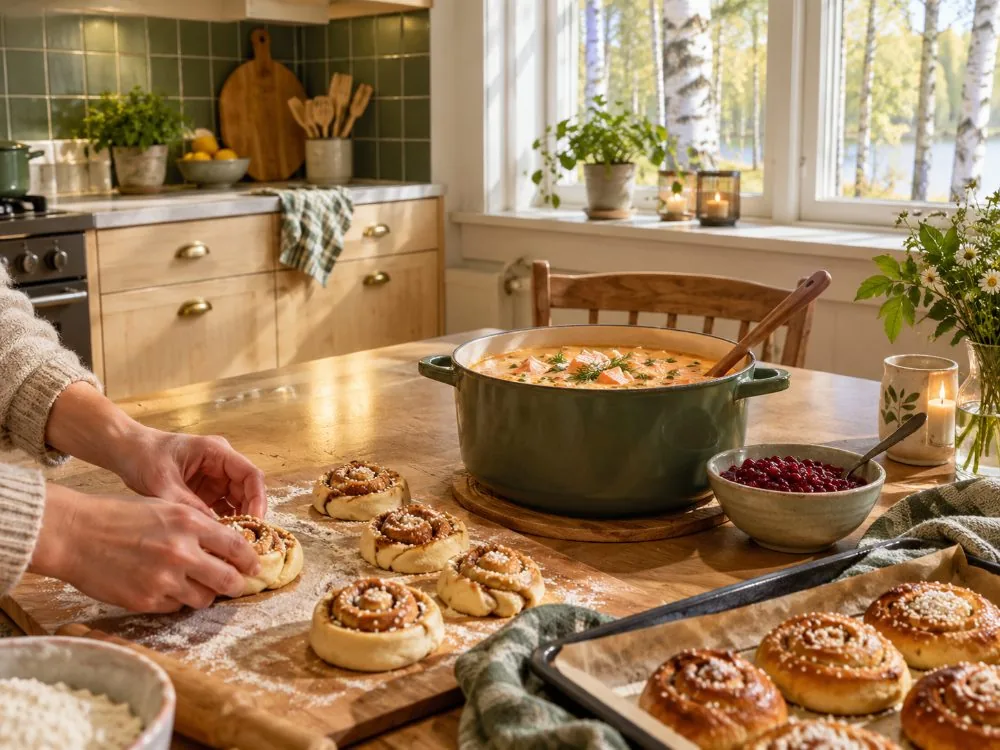
About six hours of grey light in midwinter, and a hot bowl of something indoors stops being a choice and becomes the plan. Everything a Finn eats in this season makes sense in this season: salmon soup, meatballs with mash, sour dense rye, coffee at intervals that would alarm a visitor. The cooking class is the obvious winter booking — three hours indoors in a private home on Lauttasaari, six people maximum, and you eat what you made. The market-hall walks work well too, because the hall is warm and the walking between stops is short.
What does not work in winter is anything built around an outdoor stall or a boat. Plan around that rather than against it.
Spring, April and May
Awkward and improving. Mämmi, the Easter rye pudding, is on counters for a few weeks — it looks alarming and tastes mild, and it is one of the few genuinely seasonal items you can only meet at the right moment. By May the square is setting up again and the waterbus is close to starting.
What works
- The halls are open, warm and working every month of the year
- Autumn and winter mean quiet counters and unhurried guides
- Summer adds stalls, berries, the island tasting and long light
- June to August includes cathedral entry on the flagship walk
- Christmas markets and glögi from late November
Worth knowing
- The island waterbus does not run outside summer
- Midwinter gives about six hours of usable daylight
- Berry season is roughly July to September, cloudberries briefer
- Sunday shortens hours at a lot of small counters, all year
- Summer means crowds on the Market Square and in the hall
If you are coming in winter, book an indoor-weighted tour and book it for the middle of the day. Six hours of light is not much and you will want to spend some of it outside, not all of it walking between stops in the dark.
So which month
For the widest choice, June to August. For the best balance of weather and calm, late May or September. For the halls at their most honest, October and November. For the food making the most sense, January. I would not talk anybody out of any of them; I would talk you out of booking the island tasting in October, because it will not be running.
Whatever month you pick, the time of day matters more than most people expect, and that is set out on the time-of-day page. How long you need to set aside is on the duration page.
 Waterbus to Pihlajasaari
Helsinki: Baltic Bites — Food & Island Experience
 Six people maximum
Helsinki: Cook a Traditional Finnish Home Meal
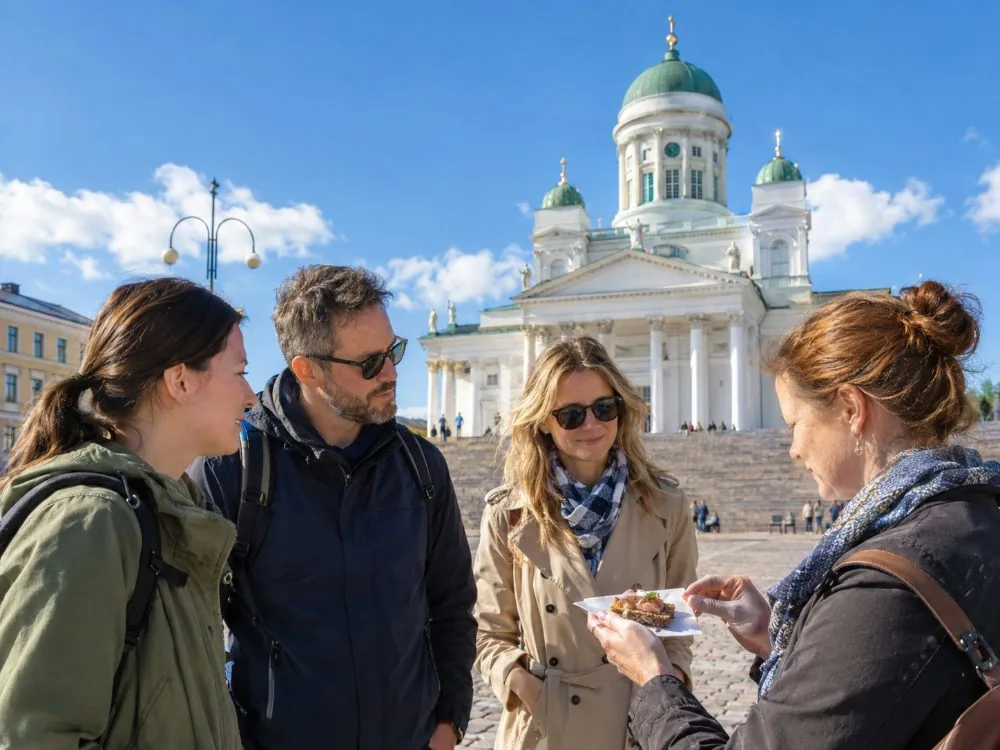 Cathedral and the Old Market Hall
Helsinki: City Tour with Food Tasting
One thing worth repeating, because I was asked it most days at the counter: neither market hall charges you to come in. Vanha Kauppahalli and Hakaniemen Kauppahalli are buildings, not attractions, and the door is open to anybody. What you book on this site is the guide who walks you between the counters and knows which of the three salmon is the one you actually want. The halls with a guide, and the Old Market Hall on its own.
Frequently asked questions
What is the best month to visit Helsinki for food?
June to August for the widest choice, late May or September for the same food with fewer people, and October to November for the market halls at their calmest. The island tasting only runs in summer because the waterbus stops: the island tour.
Do Helsinki food tours run in winter?
Yes. The halls are warm and open all year and the walks between stops are short. What stops is the outdoor half: the Market Square stalls and the island waterbus. Midwinter gives about six hours of grey light, so book midday: timing within the day.
When is berry season in Finland?
Roughly July to September, with cloudberries earlier and briefer than wild bilberries. Anybody may pick them free from any forest under everyman's right, which is why they arrive everywhere at once and then disappear. Cloudberry goes with warm squeaky cheese; bilberry goes into pie and juice: wild blueberries.
Is Helsinki worth visiting in winter for food?
It is the season the food was designed for: hot salmon soup, meatballs and mash, sour rye and constant coffee. Christmas markets and glögi appear from late November. The cooking class is the obvious winter booking: cook it yourself.