The Old Market Hall, counter by counter
What the building is
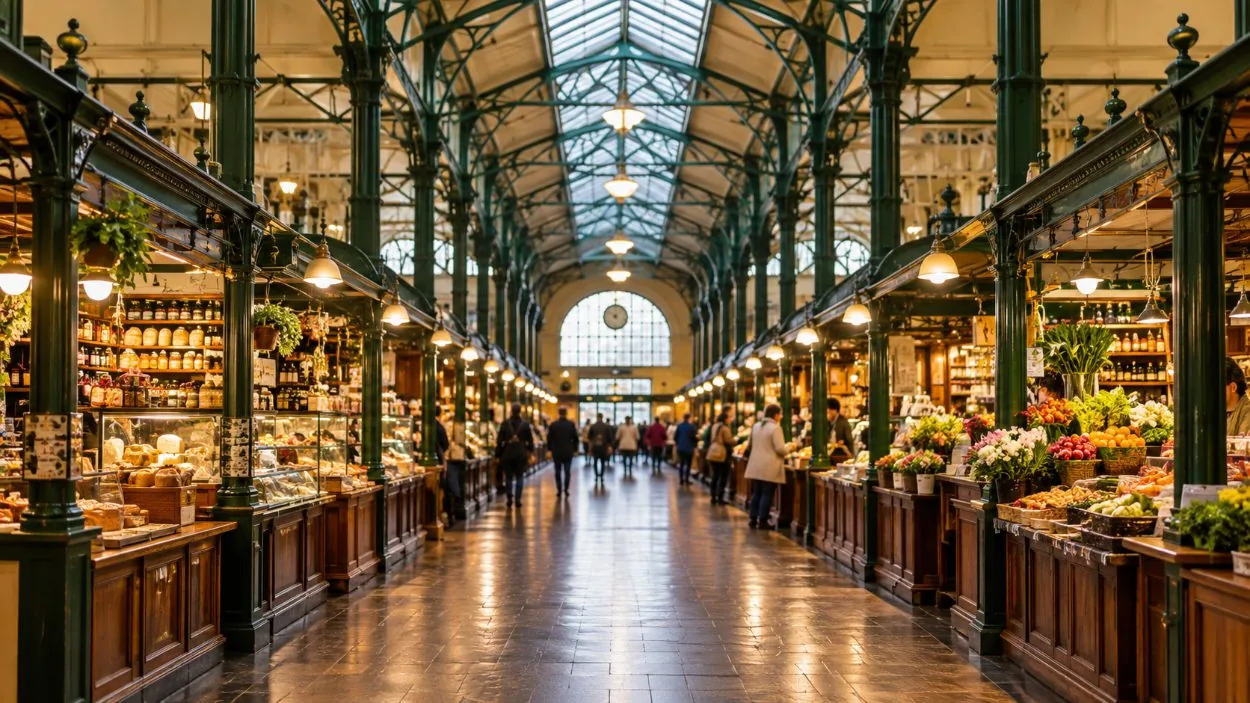
Brick and iron outside, wood inside, and a plan so simple it barely needs explaining: you walk in one end and out the other, and everything the country eats is arranged along the way. It went up in 1889 to take the food trade off the open square and put it under a roof, which in a city with this winter was less a refinement than a necessity. The counters are still wooden, the aisle is still a single line, and the scale is domestic rather than grand. It takes ninety seconds to walk end to end and most people take an hour.
It sits at Eteläranta on the waterfront, immediately beside the Market Square, which is the open-air square with the summer stalls, the berry sellers, the fried vendace and a great many souvenirs. The orange tents are the giveaway. Square and hall are different animals and it is worth knowing which one you are standing in.
The fish counters
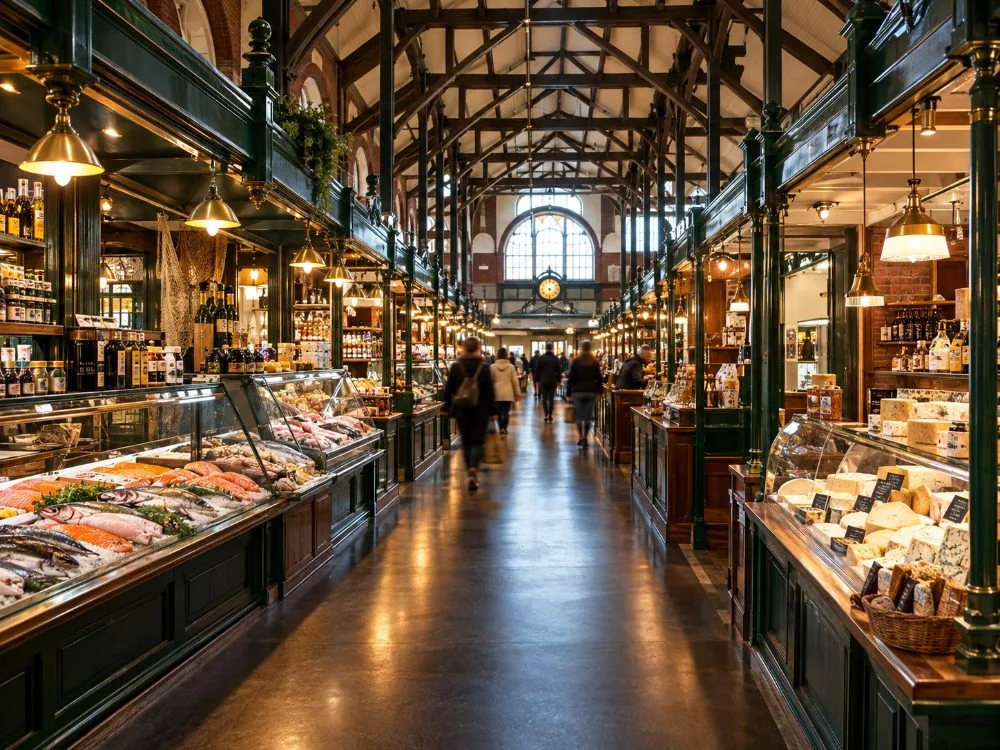
I worked the fish counter at the other hall for six winters, so this is the part I look at first. The permanent trio is silli, pickled herring in its several dressings; graavilohi, salmon cured with salt, sugar and dill; and kylmäsavulohi, cold-smoked salmon, sliced thin and darker in flavour than the cured one. Alongside them you will find roe, whitefish, and in season the little lake muikku. The useful question at a fish counter here is not what is good, it is what came in this week, and you will get a straight answer. Vendace and salmon soup.
The cheese counters
The one to look for is leipäjuusto, bread cheese, baked until it browns in patches and served warm with cloudberry jam. It comes from Ostrobothnia and Lapland, not from here, and it squeaks against your teeth on purpose. Everything else on the cheese counter is good and none of it is the reason you came. Squeaky cheese.
The charcuterie and the reindeer
Cold-smoked reindeer in thin dark slices, dried Lappish meat, sausage, cured pork. This is the counter where the map of Finland is most obvious: almost nothing on it is from the coast. Reindeer is Lapland, eleven hundred kilometres north of where you are standing. Reindeer.
The bakery counters
Rye, in rings with a hole in the middle so it could be hung on a pole to dry, and in loaves and in crispbread. Karelian pies, which are a thin rye crust with rice porridge inside, eaten with egg butter. And korvapuusti, the cardamom and cinnamon bun, which in a properly run bakery counter is still warm at eleven in the morning and gone by three. Rye, Karelian pies and the bun.
The lunch bars
Between the counters are small cafés and lunch bars with a handful of stools each. This is the cheap end of eating in an expensive city and it is where I would send anybody on their first day. A bowl of salmon soup with rye bread on the side is the single best-value hot thing in Helsinki. Come between about 11am and 1pm, which is when Finns eat lunch, and accept that the set lunch stops when the pot is empty. Sunday shortens the hours of a good many counters.
Walk the whole aisle once before you buy anything. It takes ninety seconds and it stops the thing I watched most often from behind a counter: somebody committing to the first stall they see and discovering four counters later what they actually wanted.
What a guided walk adds, and what it does not
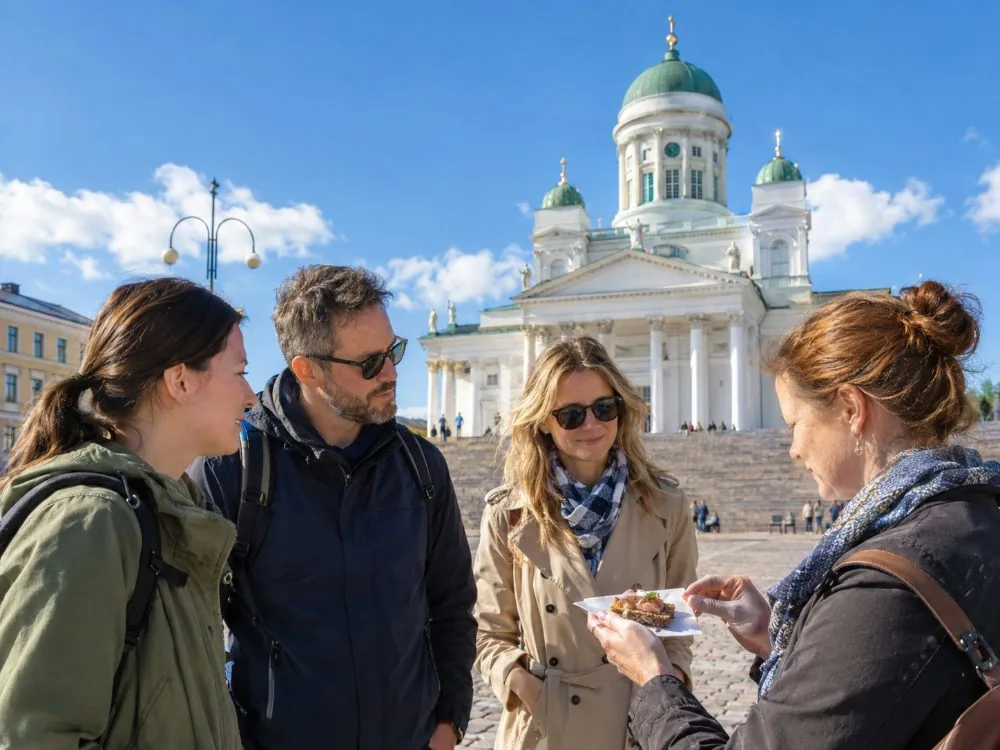
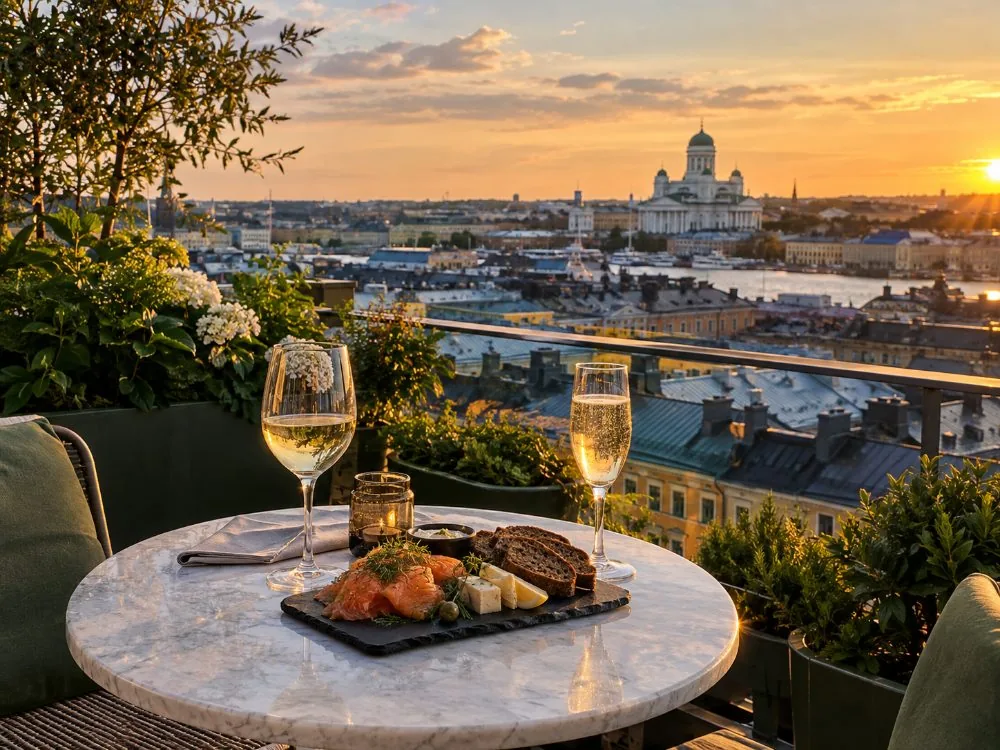
It does not add access. The door is open and nobody is turning you away. What it adds is sequencing and explanation: the cheese before the liquorice, the reindeer while your palate is clean, and somebody saying what ammonium chloride is doing in a sweet before you eat one. The three-hour city tour with food tasting walks Senate Square, the cathedral, Esplanadi and the Market Square before it comes in here, and the coffee-culture walk arrives from the other direction, by way of Oodi and the Central Station. The rooftop walk passes through the hall and then finishes above the roofline. All three of them use the same aisle.
If you want the halls specifically rather than a city walk that includes one, the market-hall tours page separates them out.
The other hall
One tram stop north, across the Pitkäsilta bridge, is Hakaniemen Kauppahalli, which opened in 1914, has two floors and is where people who live here shop. It is bigger, plainer and considerably less photographed. If the Old Market Hall is where Finland is displayed, Hakaniemi is where it is bought.
 Cathedral and the Old Market Hall
Helsinki: City Tour with Food Tasting
 Ends above the rooftops
Helsinki: Food Tour with Rooftop Bar Visit
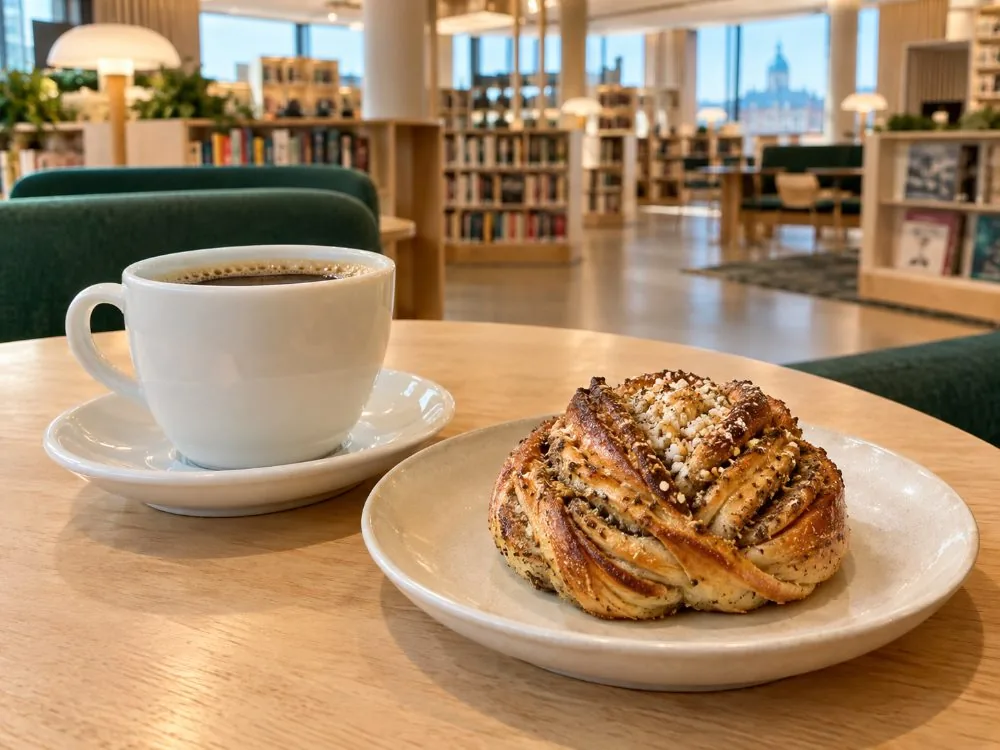 Coffee culture and Oodi
Helsinki: City Tour with Finnish Food Tasting & Coffee Culture
One thing worth repeating, because I was asked it most days at the counter: neither market hall charges you to come in. Vanha Kauppahalli and Hakaniemen Kauppahalli are buildings, not attractions, and the door is open to anybody. What you book on this site is the guide who walks you between the counters and knows which of the three salmon is the one you actually want. The halls with a guide, and the Old Market Hall on its own.
Frequently asked questions
Is the Old Market Hall free to enter?
Yes. Vanha Kauppahalli is a working food market with an open door, not an attraction with a ticket. It opened in 1889 as the city's first indoor food market. What is bookable is the guided walk between the counters: market-hall tours.
What should I eat in the Old Market Hall?
Salmon soup from a lunch counter if you want one hot thing, warm squeaky cheese with cloudberry jam if you want one surprise, and cold-smoked reindeer on rye if you want the thing you cannot get at home. The ranked shortlist is on the must-eat page.
What is the difference between the Old Market Hall and the Market Square?
The hall is the indoor building on the waterfront, open since 1889, with wooden counters along one aisle. The Market Square is the open-air square beside it, with summer stalls, berries, fried vendace and souvenirs under orange tents: the fried fish is worth it.
Which food tours go inside the Old Market Hall?
The three-hour city tour with food tasting, the rooftop walk and the coffee-culture walk all go through it. The Kallio walk and the island tasting do not, and the cooking class happens in a private home: which tour to choose.