What to know before you book
- The tasting board is a map of Finland, not of Helsinki. Eight or more tastings on the longer walks, and the reindeer, the pies and the cheese all travelled to get here: what you actually eat.
- The Old Market Hall opened in 1889 and is on almost every route. One long aisle, wooden counters, fish and cheese and bakery stalls, free to walk into on your own: the Old Market Hall explained.
- Hakaniemi opened in 1914 and is the one locals use. Two floors, food downstairs, household goods above, reopened in 2023 after a long renovation: Hakaniemi Market Hall.
- Coffee is the genuinely local thing, at about 12 kg of beans per Finn per year. More than any other country, drunk all day, with a cardamom bun next to it: why Finns drink so much coffee.
- Everything here runs 2 to 3 hours, and the cooking class caps at six people. Plan a half day, not an evening, and eat lightly before: how long a food tour takes.
What the city walk with food tasting covers
The flagship booking on this page, and the one most people end up taking. Three hours on foot from Aleksanterinkatu 26, through Senate Square and Esplanadi to the Market Square and the Old Market Hall, with seven tastings along the way.
What you get
- Seven tastings: local fish, cold-smoked reindeer, Finnish rye bread, a traditional pastry, caviar delicacies, local cheese and Finnish blue chocolate
- Non-alcoholic drinks included, and entry to Helsinki Cathedral from June to August
- A guide in English or Russian who orders at the counter for you
- Free cancellation up to 24 hours ahead, and reserve now, pay later
What it solves
- You do not want to spend restaurant meals guessing at unfamiliar things: is a food tour worth it
- You have a half day and want the centre and the food in one go: one day in Helsinki
- You want the tasting list in advance, item by item: what you actually eat
- You want to know what the counters sell before you come back and shop them alone
What to know
- Lunch, alcohol and private transport are not included, and tipping is not expected in Finland: do you tip here
- It is a walking tour in a northern city, so the weather is a real variable: what to wear
- Tastings are small and frequent rather than one sit-down meal
- Vegan, gluten-free and lactose-free guests need to check tour by tour: dietary restrictions
The anatomy of a market-hall food walk
Seven stages between the meeting point and the last plate. This is the shape the centre walks take; the order shifts with the weather and with how busy the hall is at lunchtime.
I stood behind the fish counter at Hakaniemi for six winters and I have watched several hundred of these groups come through a hall. What follows is the pattern they all share, whichever operator is leading. Nothing below is a meal — the tastings are small, they come at you every twenty minutes or so, and by the fifth one most people have stopped asking what things are called.
- The meeting point, and the first coffee — The centre walks gather within about fifteen minutes on foot of the Central Station; the flagship meets on Aleksanterinkatu 26 and the coffee-culture walk meets at Kansalaistori beside the Oodi library. The first stop is almost always a filter coffee, because that is how a Finnish morning starts and because it gives the guide a table to talk at: where the tours start.
- Senate Square and the cathedral steps — Up to the white cathedral above Senate Square, which is where the history gets told while nobody is chewing. On the flagship, entry to Helsinki Cathedral is included from June to August, which is the only part of the route that changes with the season indoors.
- Down Esplanadi — The park runs from the cathedral quarter to the harbour and it is the walking leg of the tour, five or six minutes of it. In summer it is full of people eating ice cream; in February it is the shortest line between two warm rooms.
- Market Square and the orange tents — Kauppatori is the open-air square on the waterfront: summer stalls, berries in season, fried vendace from a pan, coffee tents and a great deal of souvenir business. The orange tents are the giveaway. From roughly May to September this is where the muikku is eaten standing up; in winter the square is mostly empty and the walk goes straight indoors.
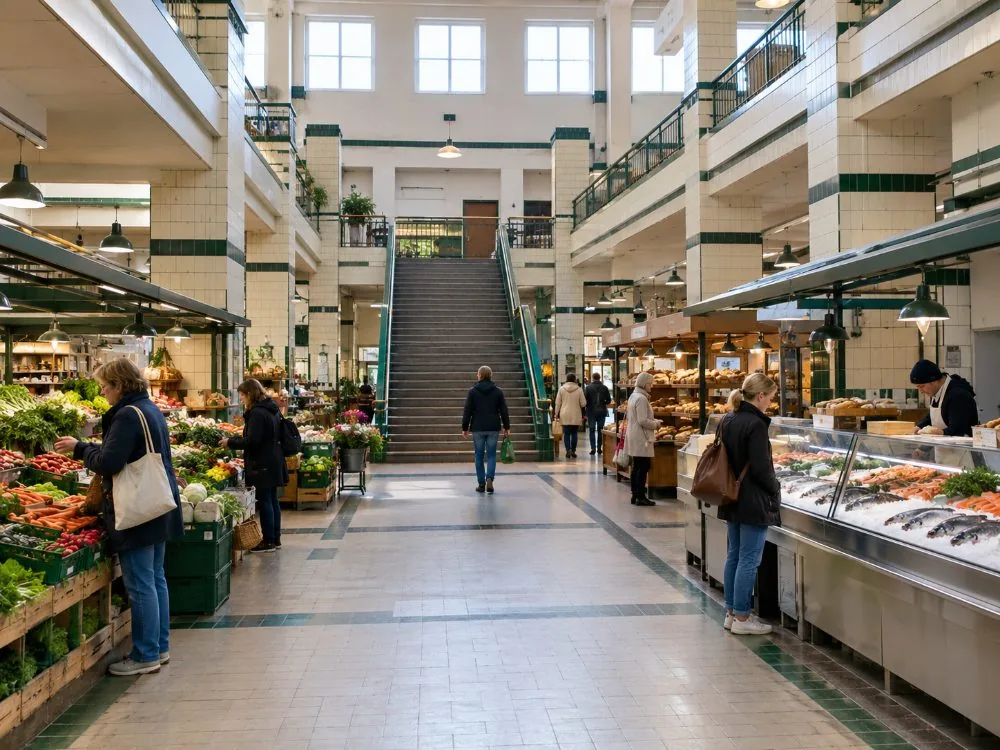
- Inside the Old Market Hall, counter by counter — One long aisle under brick and iron, opened in 1889. The fish counter does pickled herring, cured salmon and cold-smoked salmon; the cheese counter does the warm leipäjuusto with cloudberry jam; the bakery does Karelian pies with egg butter and the dark sourdough ruisleipä that everything else sits on. This is the part of the walk you are really paying for.
- The sweet, and the chocolate — Salty liquorice comes out somewhere near the end, because a guide who knows the job saves it. It is flavoured with ammonium chloride and it splits every group down the middle. The blue-wrapped milk chocolate bar follows as the apology: what salmiakki actually tastes like.
- The last stop — Where it ends depends on what you booked. The city walk finishes at the hall, the rooftop tour climbs to a bar with a view of the roofline and a drink, and the island tasting is already out on Pihlajasaari by this point with a blueberry juice in hand: the rooftop tour.
Three hours, then, and you have eaten roughly a lunch across seven or eight small plates. Nobody needs a big dinner afterwards, which is worth planning for, because Finnish kitchens in smaller places start closing from about 7pm: what time Finns eat dinner.
How to book, and what to sort out first
1. Decide whether you want a guide at all
Both market halls are free to walk into and neither of them is a tour. If you are confident ordering unfamiliar things at a counter, do it yourself and keep your money for dinner. If you are not, that is exactly what the guide is for: is a food tour worth it.
2. Pick the tour that matches your day
Six things are bookable here and they do six different jobs — the postcard centre, the working neighbourhood, the rooftop, the coffee walk, the cooking class and the summer island. The table on which food tour to choose puts them side by side.
3. Check the season and the diet rules before the date
The island tasting is summer only, because the waterbus does not run in winter. The coffee walk is explicitly not suitable for vegans, vegetarians or gluten- and lactose-intolerant guests, and the cooking class is not suitable for anyone with food allergies: dietary restrictions and the best time of year.
4. Book the slot, then eat a small breakfast
Confirmation is instant through GetYourGuide and every tour on this page cancels free up to 24 hours ahead. Then go easy at the hotel buffet, because a morning slot lands you in the hall at the Finnish lunch hour: the best time of day to book.
Check dates for the city walk with food tasting
Live availability for the flagship: three hours on foot from Aleksanterinkatu 26 through Senate Square, Esplanadi and the Market Square to the Old Market Hall, with seven tastings and non-alcoholic drinks included, and cathedral entry from June to August. Rated 4.9 from 62 reviews, free cancellation up to 24 hours ahead.
Three walks that are not doing the same job
The neighbourhood crawl, the centre walk and the rooftop tour. The middle column is the one most first visitors should take; the outer two are for people who want something specific out of the afternoon.
| Helsinki: Authentic Food Tour with 8+ Local Delicacies | Our pickHelsinki: City Tour with Food Tasting | Helsinki: Food Tour with Rooftop Bar Visit | |
|---|---|---|---|
| What it is | A neighbourhood walk with eight-plus local delicacies | The centre walk, cathedral to the Old Market Hall | A tasting walk that ends above the roofline |
| How long | 3 hrs | 3 hrs | 3 hrs |
| Meets at | The listing keeps the route to itself | Aleksanterinkatu 26 | Robert’s Coffee Jugend, Mannerheimintie 1a |
| What you taste | Eight or more local delicacies, drinks included | Fish, cold-smoked reindeer, rye bread, a pastry, caviar delicacies, cheese, blue chocolate | Cheese, fish delicacies, smoked reindeer, rye bread, a pastry, artisan chocolate |
| Drinks | Included | Non-alcoholic drinks included; alcohol is not | A drink at the rooftop bar; alcoholic drinks are not included |
| Lunch | No — the tastings are the meal | Not included | Included |
| Languages | The listing does not say | English and Russian | English and Russian |
| Rating | 4.9 from 36 reviews | 4.9 from 62 reviews | 4.9 from 28 reviews |
| Who it is for | People who want the working city rather than the postcard centre | People on a first visit who want the centre and the hall together | People who want a view and a drink at the end of it |
| View → | Book this → | View → |
Photo gallery
The counters, the plates and the coffee
The hall, the soup, the reindeer and the bun — a Helsinki food tour as it actually looks. Tap any photo to see it full size.
Every food tour worth booking in Helsinki
Six bookings, six different afternoons. The duration is on the card, because that is the number that decides whether it fits the day you have.
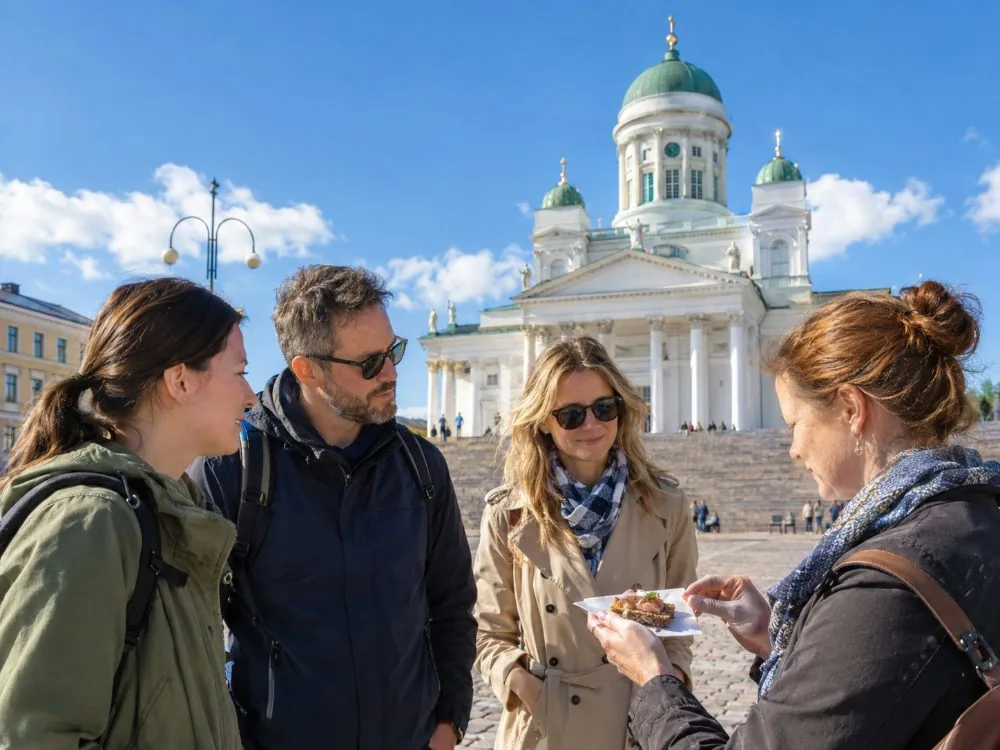 Cathedral and the Old Market Hall
Helsinki: City Tour with Food Tasting
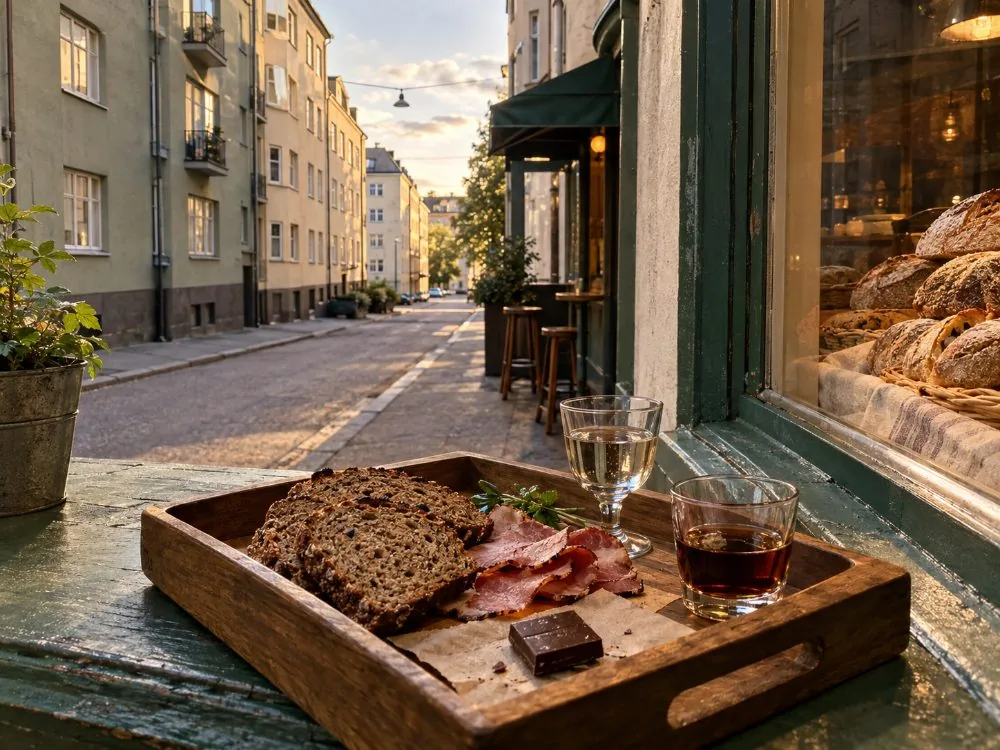 Eight local delicacies
Helsinki: Authentic Food Tour with 8+ Local Delicacies
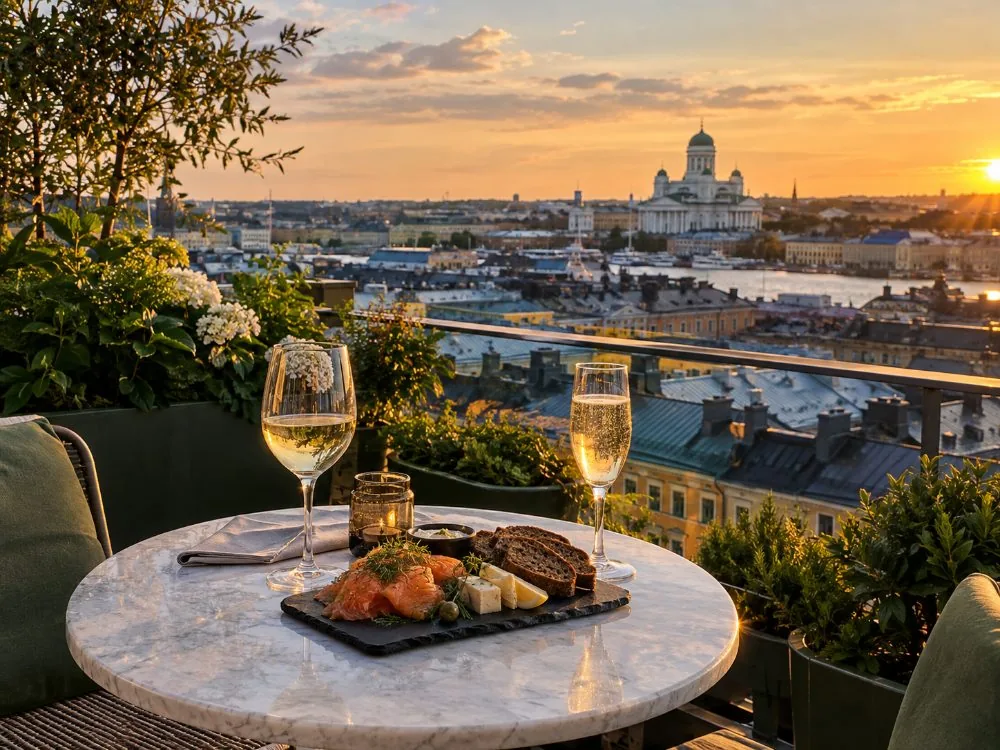 Ends above the rooftops
Helsinki: Food Tour with Rooftop Bar Visit
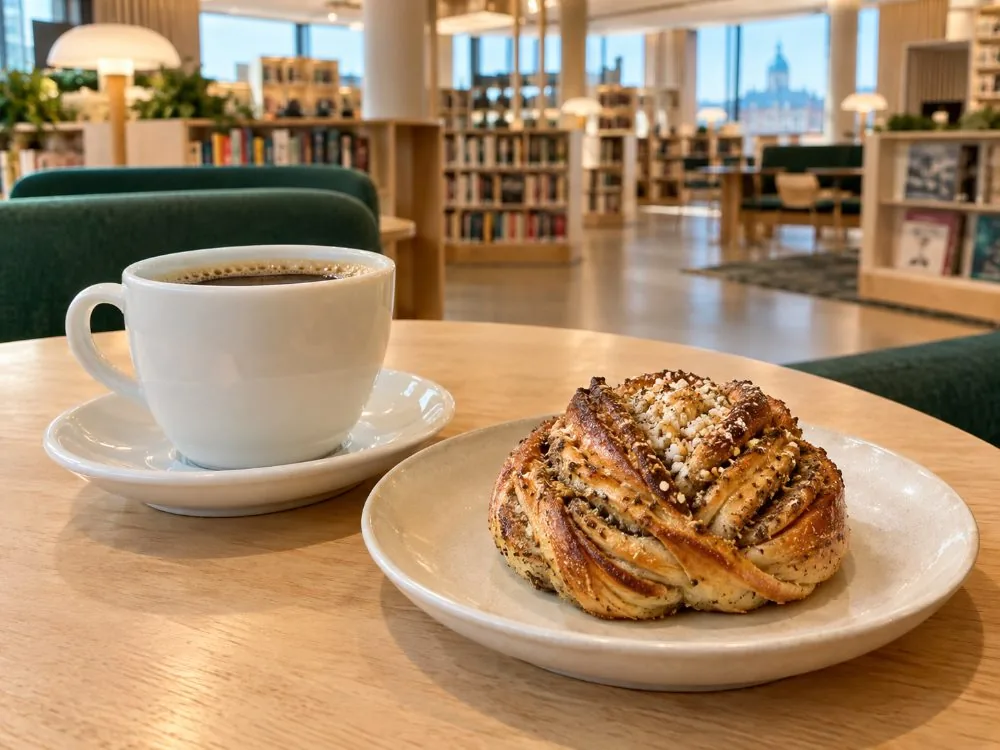 Coffee culture and Oodi
Helsinki: City Tour with Finnish Food Tasting & Coffee Culture
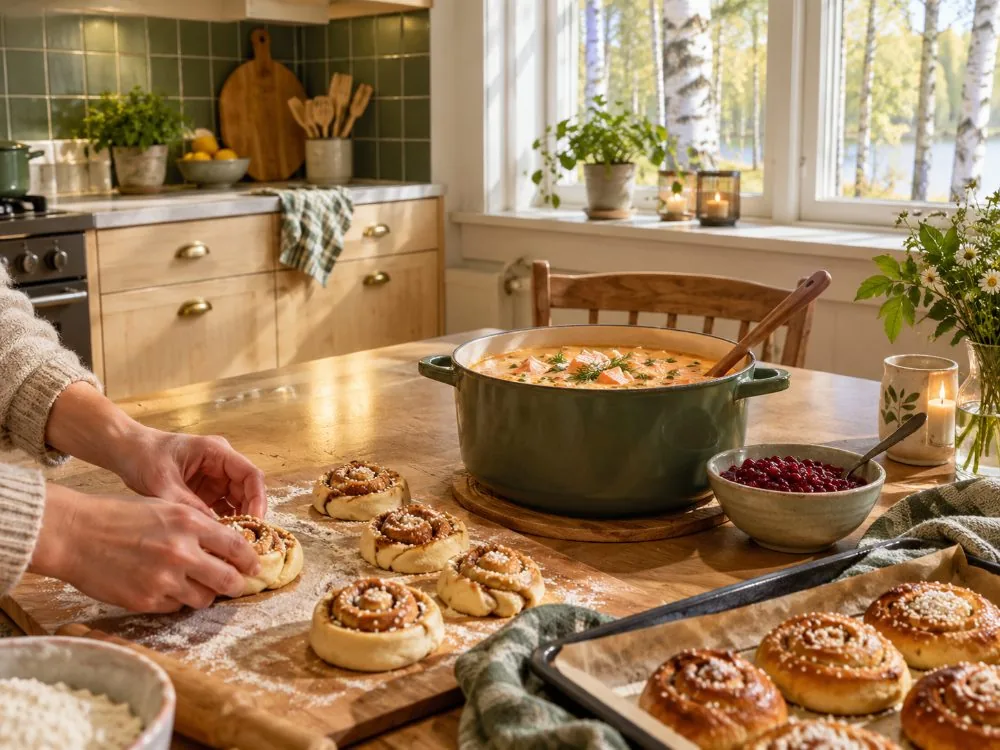 Six people maximum
Helsinki: Cook a Traditional Finnish Home Meal
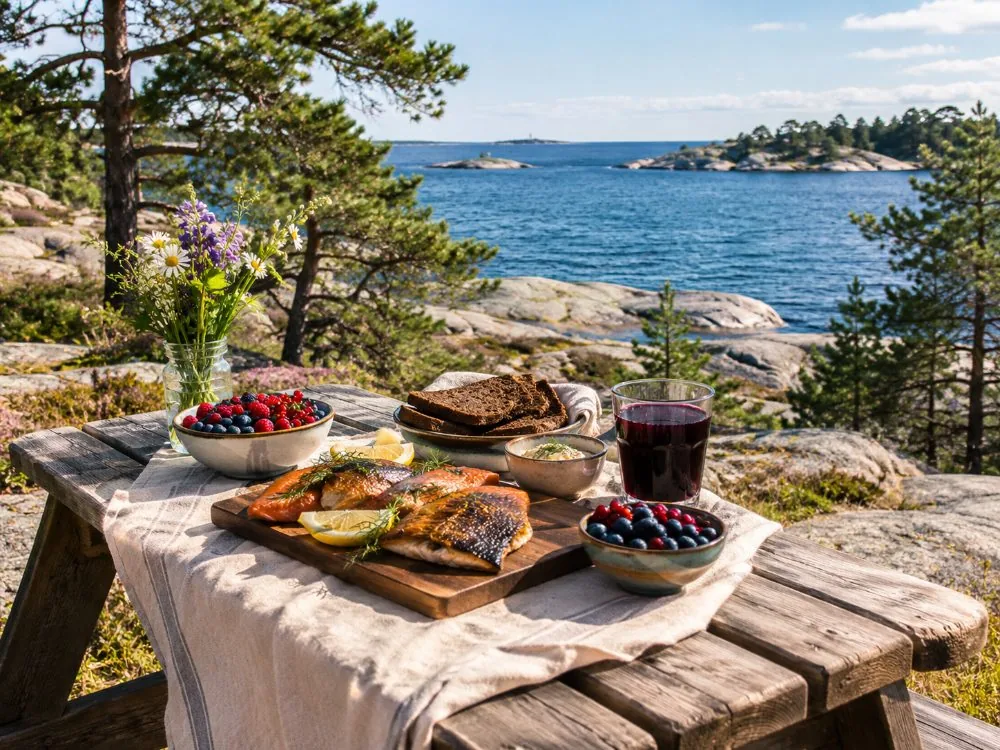 Waterbus to Pihlajasaari
Helsinki: Baltic Bites — Food & Island Experience
What people said afterwards
Real GetYourGuide reviews, kept as written. Worth saying plainly: every tour here rates 4.9 or 5.0, but four of the six have small review counts, and the Kallio walk has 36 ratings with no written reviews to quote. Five stars from seven people is a promising listing, not a proven one.
Our guide Laura is very knowledgeable of Finnish history.
The depth of knowledge of local regional history was outstanding.
The tastings were varied and delicious. The highlight was the small chocolate factory.
Guide really created the vibe of chilling with old friends.
Kiira is welcoming, patient and generous with her guests, the recipes work to perfection.
Kiki led our group to the ferry for the short commute to a beautiful island where we leisurely walked around learning about history, wildlife and nature.
Ratings and review counts are the live GetYourGuide figures from the operators. Read our full reviews ›
The questions I was asked across the counter
Six winters at the fish counter in Hakaniemi and the same handful of questions every day, answered the way I answered them then, starting with the awkward one.
Can I just do this myself?
Yes, and some of you should. Both halls are free to walk into, the counters will serve you in English, and nobody is going to be rude about a tourist pointing at a cheese. What you lose is the running commentary and the ordering, which is the whole product. If you have eaten your way around a dozen cities already, skip the tour and read what you actually eat before you go in.
Is any of this food really from Helsinki?
Barely. The reindeer is Lappish, the Karelian pies are Karelian, the squeaky cheese is from Ostrobothnia and Lapland, the vendace is a lake fish. Helsinki is the port and the railway terminus the rest of the country came through, so the halls are where it all landed and stayed. The genuine Helsinki habit is coffee and a bun: what Finnish food actually is.
What should I order if I only try one thing?
Salmon soup. It is creamy, it has potato, leek and dill in it, it is served hot at lunch counters all over the city, and it is the dish people go home and start cooking. It is also the most forgiving thing on any menu here if you are travelling with someone cautious: salmon soup, the one safe order.
Which hall should I go to?
Both, if you have the time, and they are one tram stop apart across the Pitkäsilta bridge. The Old Market Hall of 1889 is the handsome one on the waterfront and it is on almost every tour route. Hakaniemi, from 1914, is bigger and plainer, with household goods upstairs, and it is where people who live here shop: Hakaniemi Market Hall.
Is Helsinki as expensive to eat in as people say?
It is an expensive city, yes, and the market halls are the cheap end of it. A food tour front-loads all the unfamiliar things in one go so you stop wasting restaurant meals on experiments. Tap water is excellent everywhere and served free, tipping is not expected, and the weekday lunch hour is the best value in the city: is Helsinki expensive.
Will the black sweet be as bad as I have heard?
Salmiakki is salty liquorice flavoured with ammonium chloride and it divides every group I have ever watched taste it. Half the table goes quiet and the other half asks where to buy a bag. It also turns up as ice cream, as a chocolate filling and as a spirit, so there is no avoiding it on a tasting board: salmiakki, explained.
Those dates don’t work?
Browse the other tables in Helsinki — the market-hall walks, the neighbourhood crawls, the cooking evenings and the island tasting — and pick a day that suits you, with instant confirmation.
Helsinki food, explained
Almost everything a Helsinki food tour puts in front of you was invented several hundred kilometres from Helsinki: the cold-smoked reindeer is Lappish, the Karelian pies are Karelian, the squeaky leipäjuusto comes from Ostrobothnia, the vendace is a lake fish, and the dark sourdough rye belongs to the whole country rather than to this city. Helsinki is the harbour and railway terminus everything arrived through, and the two market halls — Vanha Kauppahalli from 1889 and Hakaniemen Kauppahalli from 1914 — are where it still lands. I spent six winters behind the fish counter at the second of those, and this is what I ended up explaining most often.
Finnish food is a map of Finland, not a menu from Helsinki
Take a tasting board apart and you are looking at a country rather than a city. Poro, reindeer, comes down from Lapland as cold-smoked slices. Karjalanpiirakka, a thin rye crust with rice porridge in it, comes from Karelia and is eaten with munavoi, egg butter. Leipäjuusto is a fresh cow’s-milk cheese baked until it browns in patches, from Ostrobothnia and Lapland, served warm with cloudberry jam and squeaking against your teeth on purpose. Muikku, vendace, is floured and fried whole and eaten head, bones and all. Ruisleipä, the sour dense rye, often comes as a ring, because the hole was for hanging it on a pole to dry.
That is not a criticism of the city. It is the honest description, and it is the best argument for taking a guide rather than wandering in alone. Somebody has to tell you that the black sweet is flavoured with ammonium chloride, that the brown bread is sourdough, and that the cheese is meant to squeak: what Finnish food actually is.
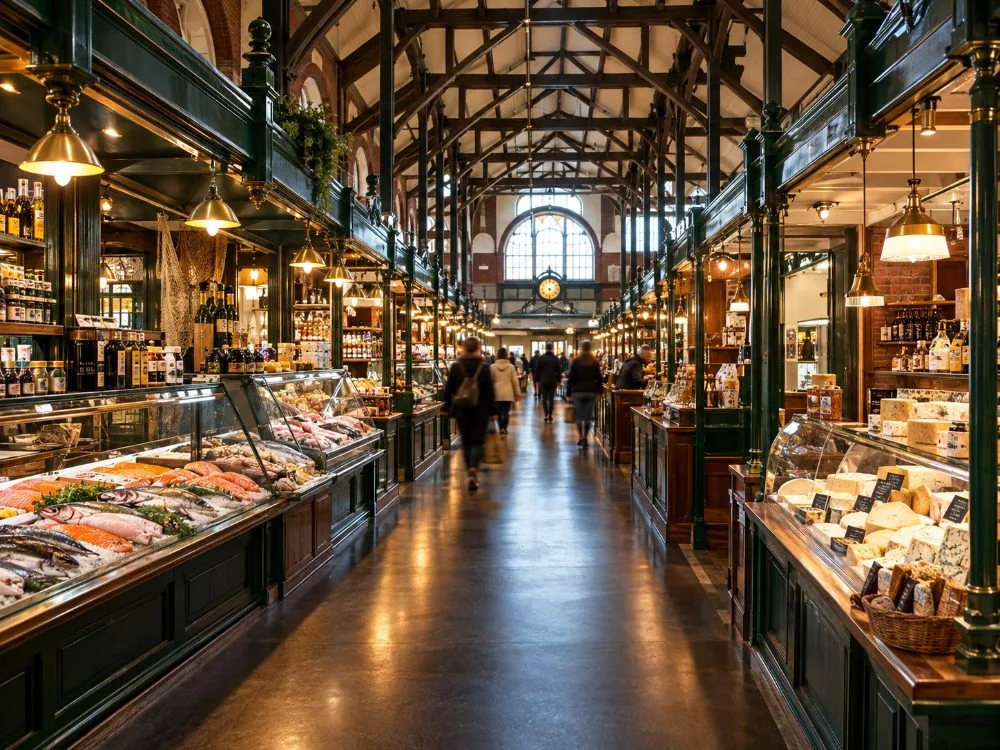
Two halls, one tram stop apart, doing different jobs
Vanha Kauppahalli opened in 1889 at Eteläranta on the Market Square waterfront and was the city’s first indoor food market. Brick, iron and wooden counters down one long aisle: fish, cheese, charcuterie, bakery stalls, a few small cafés and lunch bars. It is the hall on almost every tour route, and handsome enough that people photograph it before buying anything in it.
Hakaniemen Kauppahalli is one tram stop north across the Pitkäsilta bridge and opened in 1914. Two floors, food downstairs, household goods and textiles above. Bigger, plainer, far less of a destination — a shopping hall for people who live here, reopened in 2023 after a long renovation spent trading from a temporary hall on the square. To see what Helsinki actually buys, go there. Both are free to walk into and neither is a tour: the Old Market Hall and Hakaniemi.
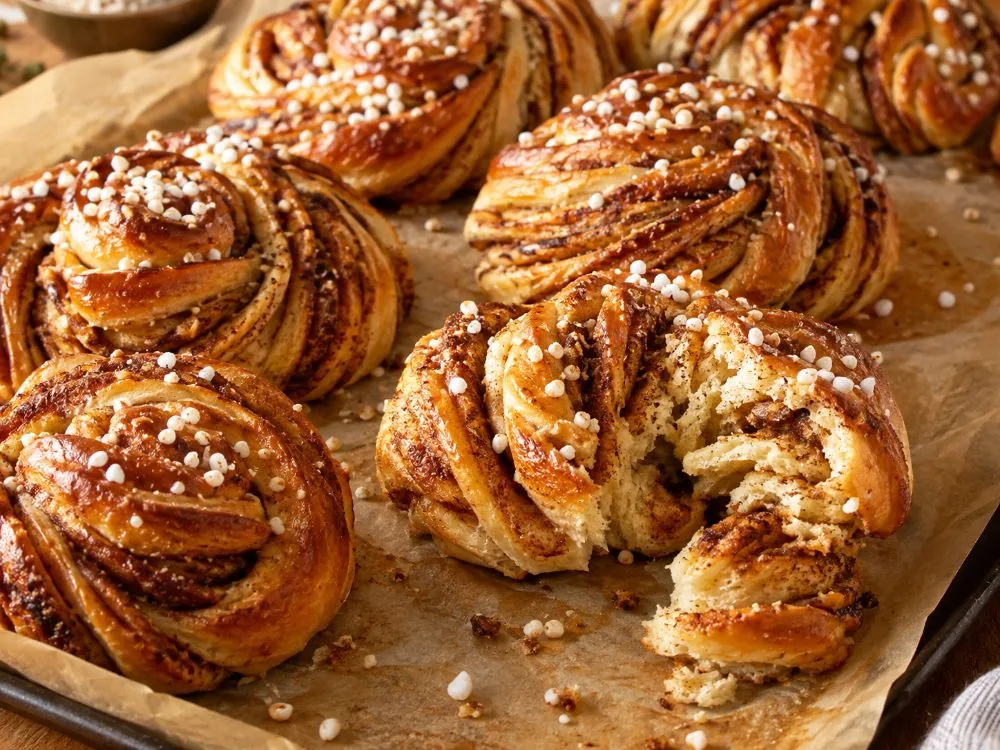
Coffee and a bun is the one thing Helsinki genuinely owns
Finland drinks more coffee per head than any country on earth, roughly 12 kg of beans per person per year, which at the heavy end is eight or nine cups a day. The default is light-roast filter coffee, black or with milk, drunk from morning to evening, and the coffee break is written into working life here — kahvitauko is part of a shift, not a treat. Next to it goes korvapuusti, the cardamom-and-cinnamon bun whose name means “a slapped ear”, cut and pressed so the layers fan open. It is eaten with coffee, not as dessert. If you want one sentence about what is local here, that is it: why Finns drink so much coffee.
When a guided walk earns its place, and when it does not
It earns it when the food is unfamiliar and the city is expensive, which is this situation exactly. Nobody orders six strange things alone when each one might be a wasted meal, so people default to what they recognise and go home having eaten salmon and meatballs. A guide front-loads the unknown: two and a half to three hours, seven or eight small plates, somebody ordering at the counter and naming the thing before you commit to a whole portion of it.
It does not earn its place if you are a confident eater with time to spare, because the halls are free and the counters will serve you in English. It also does not if your diet is strict: one tasting walk is explicitly unsuitable for vegans, vegetarians and gluten- or lactose-intolerant guests, and the cooking class turns away anyone with food allergies. Check before you book: dietary restrictions.
The year splits cleanly in two
Tours run all year; the outdoor half of them does not. From roughly May to September the Market Square stalls are working, berry season runs about July to September with cloudberries arriving earlier and ending sooner than bilberries, and the waterbus to the islands is sailing. In winter it moves indoors, the island tasting stops because the waterbus does not run, and a hot bowl of lohikeitto with about six hours of grey light outside is the whole point. Christmas markets and glögi appear from late November: the best time of year.
What I would tell someone coming once
Eat a small breakfast, take a morning walk that goes into the Old Market Hall, and let the guide order. Go back to Hakaniemi alone the next day and buy what you liked. Eat your main meal at the weekday lunch hour, roughly 11am to 1pm, because that is when Finnish kitchens are at their best, and remember that dinner here happens between about 5pm and 7pm and small kitchens close early. Drink the tap water. Do not tip; service is included and nobody will chase you. And try the salty liquorice in company, because the reaction is half of it.
Frequently asked questions
What food is Helsinki famous for?
Helsinki is famous for food that came from everywhere else in Finland and met at its two market halls: cold-smoked reindeer from Lapland, Karelian pies from Karelia, squeaky leipäjuusto from Ostrobothnia with cloudberry jam, fried vendace from the lakes, dark sourdough rye and creamy salmon soup. The one habit the city genuinely owns is coffee and a cardamom bun. See what Finnish food actually is and what you must eat in Finland.
How much should a food tour cost?
Judge it by what is in the ticket rather than by the number. On these six you are buying two and a half to three hours, seven or eight tastings, drinks on most of them, a guide who orders for you, and free cancellation up to 24 hours ahead. Two of them include lunch or the cooking of a whole meal. The page shows the live figure when you check dates: what a food tour is worth.
What must I eat in Finland?
Salmon soup, because it is the best hot lunch in the city and the one people cook at home afterwards. Dark sourdough rye, because everything else sits on it. Warm leipäjuusto with cloudberry jam, because nothing else squeaks. A korvapuusti with filter coffee, because that is the national meal. Then salmiakki, to find out which half of the group you belong to: the top Finnish dishes.
Is food expensive in Helsinki?
Helsinki is an expensive city to eat in and there is no point pretending otherwise. The market halls are the cheap end of it, the weekday set lunch between roughly 11am and 1pm is the best value on offer, and tap water is excellent and free everywhere, so bottled water is wasted. Tipping is not expected. See is Helsinki expensive and where the cheap end is.
What is a culinary tour or food tour?
A guided walk between several eating places, with small tastings at each, rather than a sit-down meal in one. In Helsinki that usually means four to six stops over two and a half to three hours, built around the Old Market Hall, with a guide who orders, explains and keeps the group moving. You eat roughly a lunch across the whole thing: what a food tour is and how long it takes.
What is the best month to visit Helsinki?
July to September if you want the outdoor half: Market Square stalls, berry season, fried vendace from a pan and the island waterbus, which does not run in winter. Cloudberries come earlier and end sooner than bilberries. Midwinter gives about six hours of grey light, which is when the halls and a bowl of hot soup earn their keep, and glögi and the Christmas markets start in late November: the best time of year.
What time do Finns eat dinner?
Early. Commonly between about 5pm and 7pm, and kitchens in smaller places close early after that, which catches out anyone arriving from southern Europe expecting a table at nine. Lunch is early too, roughly 11am to 1pm, and many places serve a set weekday lunch and stop when it runs out. Sunday is quiet and counters shorten their hours: what time Finns eat dinner.
What is free in Helsinki?
Both market halls are free to walk into, and so is Market Square. Tap water is free and excellent in every restaurant. Forest berries are free to pick under everyman’s right, which is why bilberries turn up in so much baking. Esplanadi park costs nothing and takes you from the cathedral quarter to the harbour: what is free in Helsinki and the Old Market Hall.
Still have a question? Write to us at [email protected]